
Industrial Dust Collection Systems for Woodworking
Woodworking shops generate some of the most persistent airborne contaminants in any production setting. Every saw cut, planing pass, routing job, and sanding station puts particles into the air, from heavy shavings down to dust fine enough to stay suspended for hours.
Airflow Systems, Inc. has been engineering and building dust collection and air cleaning equipment since 1985. Our industrial dust collection systems for woodworking are made to capture that full range of debris at the source, helping keep shop air cleaner and operations compliant.
Why Are Dust Collectors Important for the Woodworking Industry?
Prolonged exposure to wood dust is a recognized respiratory risk, and certain hardwood dusts have been linked to serious long-term health effects, which is why agencies such as OSHA set exposure limits for it. Effective dust collection in the woodworking industry protects the people who spend their days breathing shop air.
Fine wood dust is also combustible. When enough of it accumulates or becomes suspended in the air, it introduces a real fire and deflagration hazard that NFPA 660, the consolidated standard for combustible dusts and particulate solids, is written to address.
Clean air also supports the work itself. Airborne dust settles on wet finishes, contaminates glue-ups, and clogs the moving parts of expensive machinery. A shop that controls its dust contributes to better finish quality and longer equipment life in a workspace that stays inspection-ready.
Woodworking Dust Collection Solutions
We build dust collectors and downdraft tables for the full spectrum of woodworking operations, from a single bench up to a connected production floor.
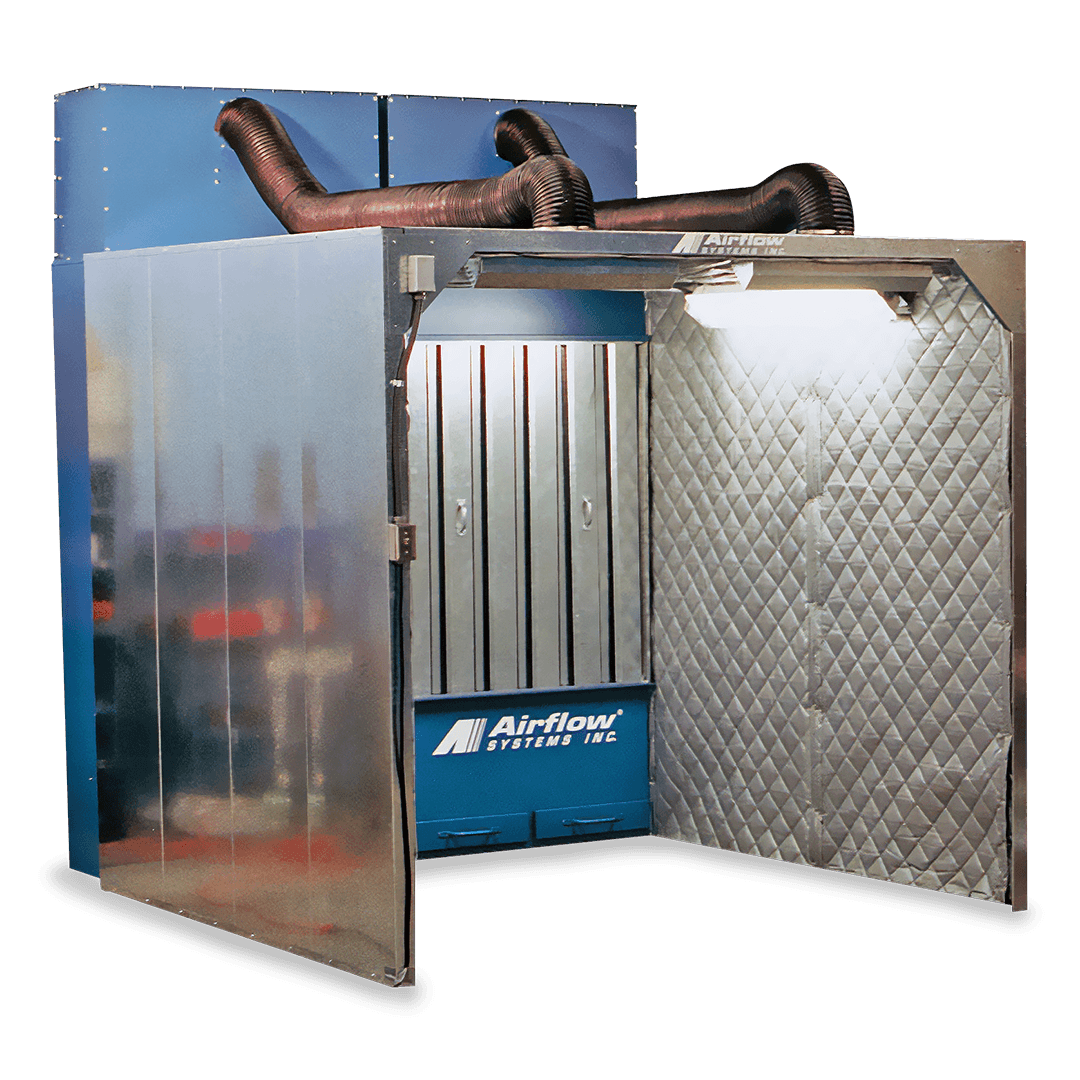 Dust Booths
For sanding large panels, finishing assembled casework, or any task where the operator moves around the work rather than staying at a fixed point, a dust booth encloses the entire operation and continuously pulls wood dust away from the breathing zone. The Power Booth, Dust Control Booth, Panel Filter Power Booth, and Panel Filter Booth are all self-contained units that need no external ductwork or separate collector, so they can be placed directly where finishing or heavy sanding happens on the shop floor.
Dust booths fill the gap that ducted collectors and downdraft tables leave open. When the workpiece is too large for a table surface, or the task generates too much airborne wood dust for point-of-source capture alone, a booth provides full-zone containment around the work.
Air Cleaners
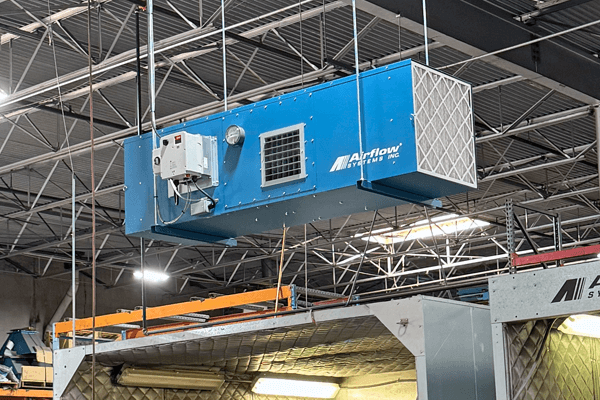
Sanding, routing, and milling release fine wood dust that source-capture equipment does not fully intercept. Those particles stay suspended in shop air long after the tools stop running and accumulate across the entire space over the course of a workday. Our air cleaners, including the AirPod, TH-280H, TH-280V, G-Series, F70R, and F-120, continuously recirculate the ambient air through non-electrostatic filtration media to bring the overall dust load down.
Air cleaners work alongside ducted collectors, portable units, and downdraft tables rather than replacing them. They handle the residual fine wood particulate that escapes or migrates beyond the reach of source capture, keeping air quality in check across the full shop floor.
Stationary Industrial Dust Collectors
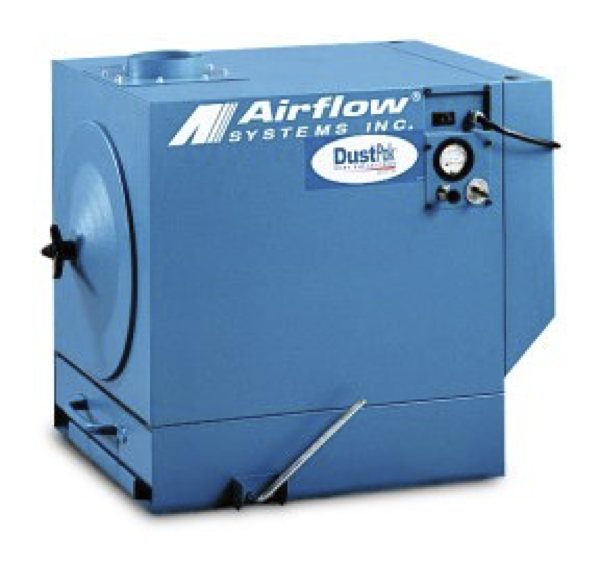
Our stationary dust collectors, including the DCH series and the larger DC-4 through DC-18 units, are made for continuous, high-volume extraction in a fixed shop layout. Ducted to your saws, planers, jointers, and sanding stations, they pull chips and dust away from each machine and filter the air through cartridge media before it returns to the room. Welded seams rather than bolted panels give the housing a tighter, more durable build, and the cartridge filtration captures fine particulate generated by woodworking without relying on an electrostatic charge.
For a busy shop running several machines through the day, a ducted woodworking dust collection system of this type keeps capture steady no matter how heavy the workload gets.

Portable Dust Collectors
When the work moves or the space is tight, our portable dust collectors bring extraction directly to the source. Models such as the PCH-1, PCH-2, Mini-Pac, Mini-Vac, Airpod, and PAC-91 roll to wherever dust is generated, which suits smaller woodworking studios, trim and finish stations, and shops that reconfigure their floor often. The Mini-Vac supports up to three branching arms, so a single unit can serve multiple benches at once.
Because these collectors capture particles right at the tool, contaminants get pulled out of the air before they spread across the shop. Portable units also work alongside a stationary setup, covering workstations that sit outside the reach of fixed ductwork.
Downdraft Tables
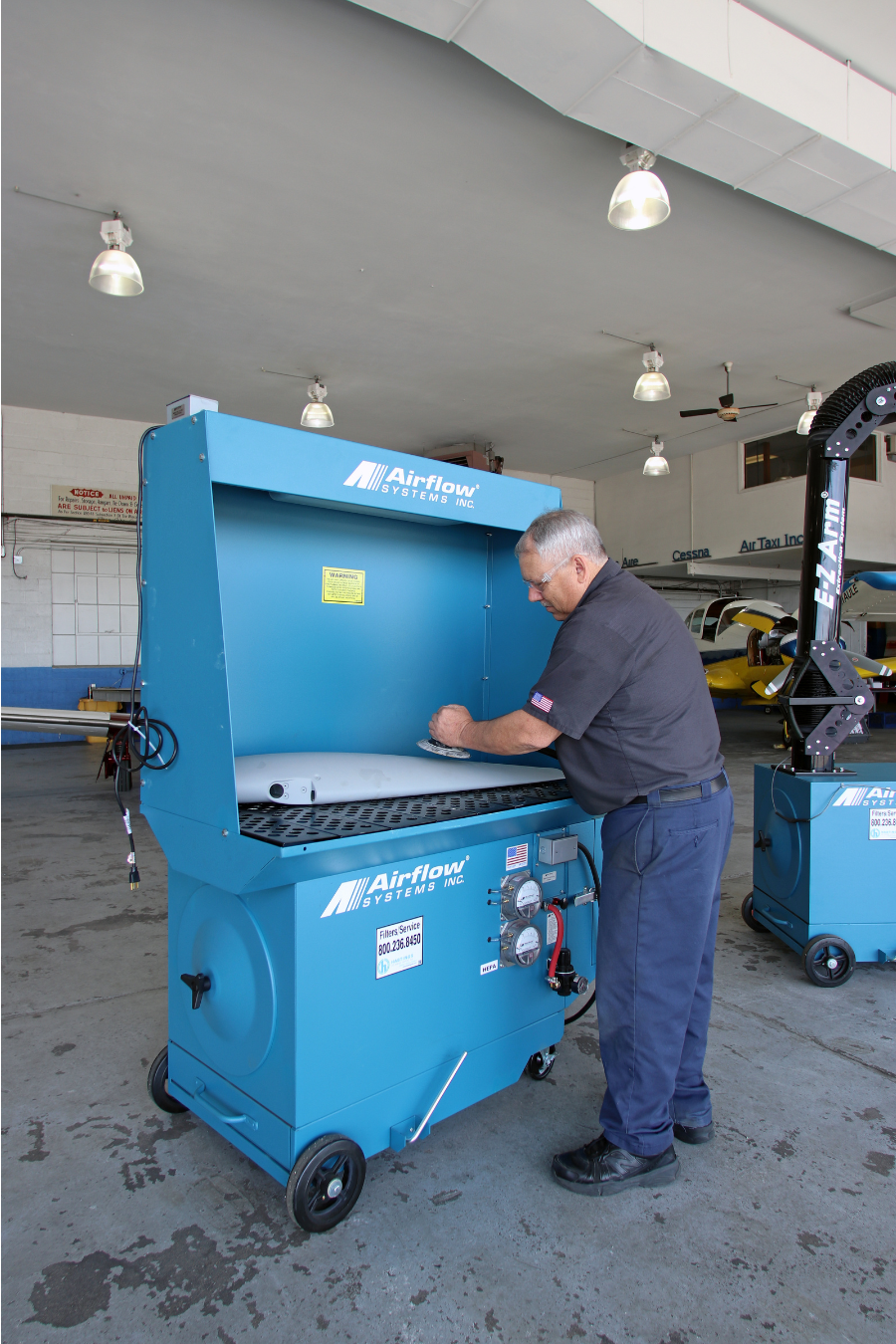 For operations where dust needs to be captured right at the work surface, downdraft tables offer source extraction that stationary and portable collectors can complement but cannot fully replicate. As a workpiece is sanded, routed, or finished on the table surface, airflow draws the generated dust and fines downward and away from the operator's breathing zone before they have a chance to spread across the shop.
We build dry downdraft tables suited to the fine particulate common in woodworking, and custom configurations are available to fit your surface size, airflow requirements, and workflow. Downdraft tables work well as a standalone solution for a dedicated finishing or sanding station, and they integrate naturally alongside a broader dust, fume, and mist collection setup when multiple sources need to be addressed.
How to Choose the Correct Dust Extraction System for Woodworking
The right setup depends on how your shop actually runs. A few factors guide the decision.
1. Start With the Airflow Your Machines Demand
Dust collection is measured in cubic feet per minute (CFM), and each tool has its own requirements. A wide-belt sander or a large table saw moves far more material than a single spindle sander, so total the demand of the machines you plan to run at once before sizing a unit. Undersizing is the most common reason a collector underperforms.
2. Match the Filtration to Your Dust
Woodworking produces everything from coarse shavings to near-invisible sanding dust. Cartridge filters handle the fine particulate that does the most damage to lungs and finishes, while heavier chips and debris are easy work for the system to convey. If your shop also sprays finishes or works with materials that emit odors, activated carbon media can be added to address the fumes.
3. Weigh Fixed Against Mobile
A permanent, ducted collector is the stronger choice for a settled floor plan with steady, high output. If benches move, jobs run short, or floor space is limited, a portable collector that follows the work may serve you better. Many shops run both.
4. Plan for Integration and Upkeep
Think through how ducting will route to each machine, what electrical service the blower needs, and how much noise the unit will add in an enclosed space. Easy-access panels make filter changes quick, and keeping spare filters on hand means a clog never stops production. Because wood dust is combustible, it is also worth confirming that your configuration aligns with the fire-safety codes that apply to your facility.
 Explore Dust and Fume Collection Solutions for Woodworking
For four decades, woodworking operations have come to Airflow Systems, Inc., for equipment that holds up to daily shop conditions and keeps performing. When an off-the-shelf model doesn't fit the way your shop works, our team will engineer a solution around your machines, your floor plan, and the regulations you answer to.
Tell us about your machines, your floor plan, and the dust you are dealing with, and our team will size the right woodworking dust collection system for the way you work. Request a quote to learn more.


