
Dust Collectors for the Aerospace Industry
Aerospace manufacturing generates contaminants that most industrial facilities never encounter: carbon fiber composite particulate, titanium and aluminum machining debris, metal fumes from structural welding, and chemical fumes from surface coatings. Each one carries its own compliance obligations and workforce health implications.
That's where Airflow Systems’ expertise is put to work. We've supported aerospace and defense operations, including Boeing, since 1985.
Why Dust Collectors Are Important for the Aerospace Industry
Aerospace operations deal with contaminants that carry compliance and health consequences:
- - Carbon fiber composite dust contains respirable fibers regulated under OSHA's General Duty Clause and ACGIH threshold limit value guidelines.
- - Titanium and aluminum machining debris can be combustible under NFPA 660.
- - Welding fumes from high-strength alloys quickly exceed acceptable exposure limits without localized capture at the source.
Contamination control matters for product quality, too. Particulate settling on aircraft components during assembly or finishing can compromise surface integrity and require rework. Dust collection for aerospace protects your workforce and the work itself.
Aerospace Dust, Mist, and Fume Solutions
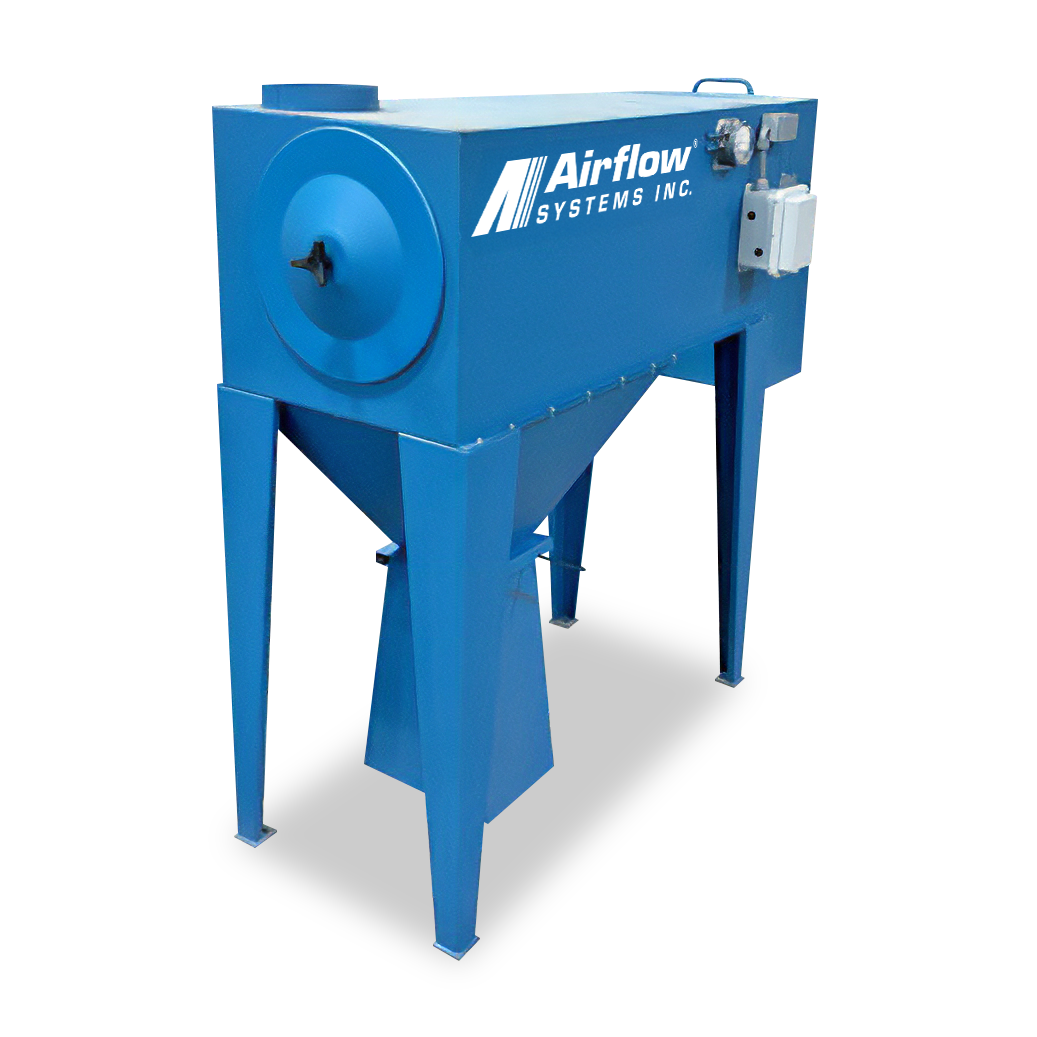
Airflow Systems manufactures industrial air and mist filtration equipment engineered for aerospace production environments.
Dust Collectors
The DC and DCH series handle high-volume particulates from composite cutting, drilling, grinding, and metal machining. Paired with source capture arms at each workstation, they control contaminants at the point of generation before they migrate to neighboring areas or sensitive components.
Mist Collectors
CNC machining of titanium and aluminum produces oil and coolant mist that escapes enclosures quickly. Mist collection for aerospace machining requires systems sized to each cell's CFM demands. The MPH and MP series address this at the machine level, keeping mist from accumulating in shared production areas.
Fume Collectors
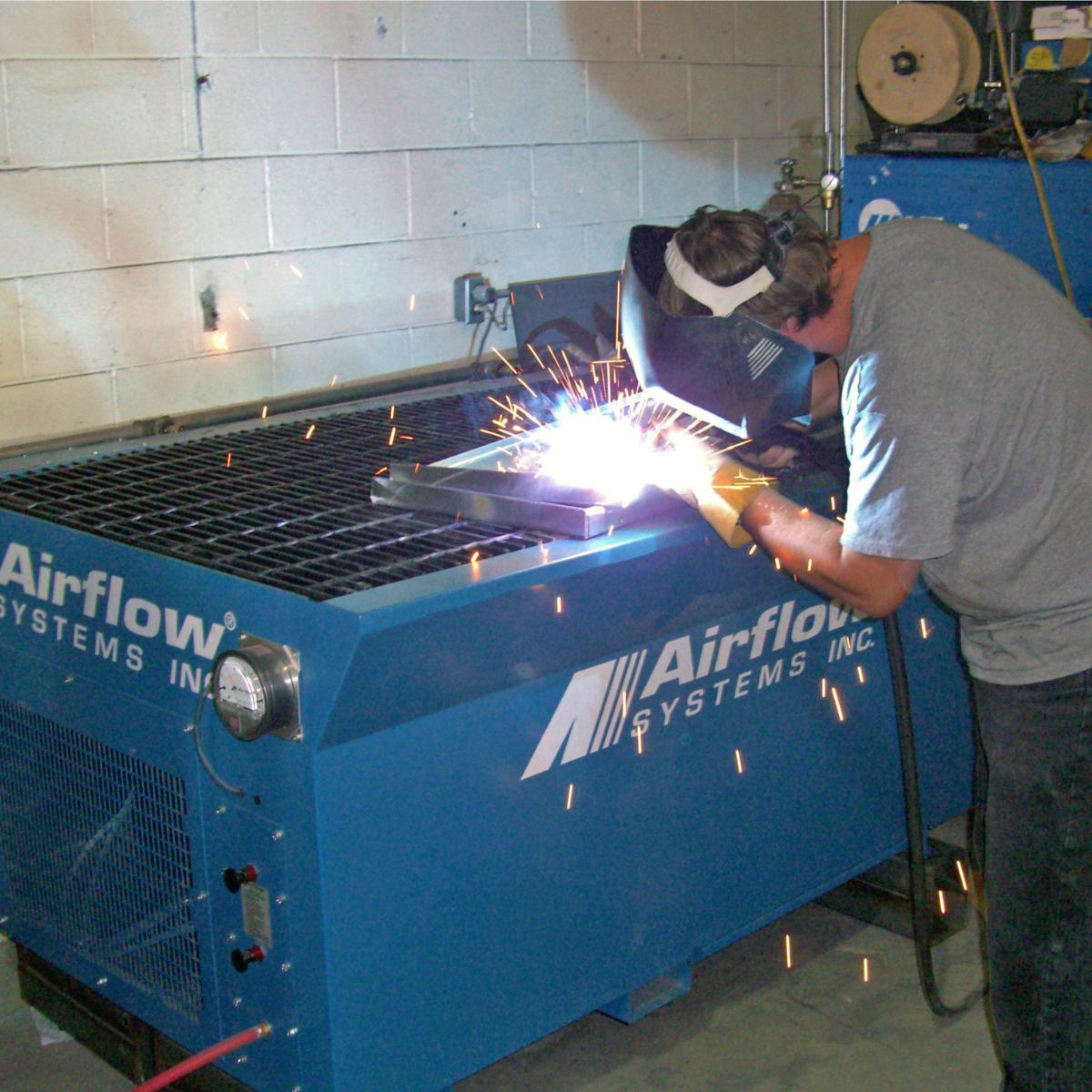
Welding on aircraft structures generates metal fumes that require capture near the weld point. Fume collection for the aerospace industry uses source-capture arms or high-vacuum extraction units to control exposure below OSHA permissible exposure limits and ACGIH TLVs before fumes spread through the shared workspace.
 How To Choose the Correct Dust Extraction System for Aerospace
The most common mistake is sizing a system to the facility rather than the process. In aerospace, contaminant type drives everything. A system configured for general metal dust will not filter composite particulate to the efficiency required for respirable fibers. A standard cartridge collector is not appropriate for titanium without a Dust Hazard Analysis supporting that application under NFPA 660.
Start with your primary contaminants and their particle size range. Factor in CFM requirements at each capture point, whether source capture or ambient filtration fits the application, and any combustible dust requirements for the materials in use.
Work with a supplier who assesses your specific process rather than recommends a catalog pick. The right system gets built around your operations; the wrong one creates compliance exposure.
Find the Right System for Your Facility
Contact Airflow Systems to talk through your facility's pain points and which systems make sense for your processes. Our team will assess your specific contaminants, CFM requirements, and compliance obligations before recommending anything.
Frequently Asked Questions
Does OSHA have a specific exposure limit for carbon fiber dust in aerospace manufacturing?
OSHA does not have a substance-specific permissible exposure limit for carbon fiber composite dust. However, the General Duty Clause requires employers to protect workers from recognized hazards, and OSHA has cited facilities where carbon fiber exposure poses a health risk due to inadequate controls. ACGIH publishes TLV guidelines for carbon fiber that many aerospace EHS programs treat as a benchmark, and internal facility limits are often more stringent than federal minimums. Source capture at composite cutting and drilling operations is the standard approach to managing exposure.
Is titanium dust classified as a combustible dust hazard in aerospace machining?
Yes. Titanium dust and fines generated during dry machining or grinding are combustible and fall under NFPA 660, the Standard for Combustible Dusts and Particulate Solids. NFPA 660 consolidates several previous standards, including the former NFPA 484 for combustible metals, and prohibits the use of dry media collectors on titanium unless a Dust Hazard Analysis supports that application and is approved by the Authority Having Jurisdiction. Facilities machining titanium need to verify that their dust collection equipment is rated and configured for that hazard before putting it into service.
Can one dust collection system handle both composite and metal dust in an aerospace facility?
Not always. Carbon fiber composite dust and metal dust often require different filtration efficiencies. When combustible metals such as titanium or aluminum are involved, system design requirements go beyond standard dust collection and must be evaluated against NFPA 660 and OSHA requirements for each material. Assuming a single system covers everything is one of the costliest mistakes in aerospace facility planning.


